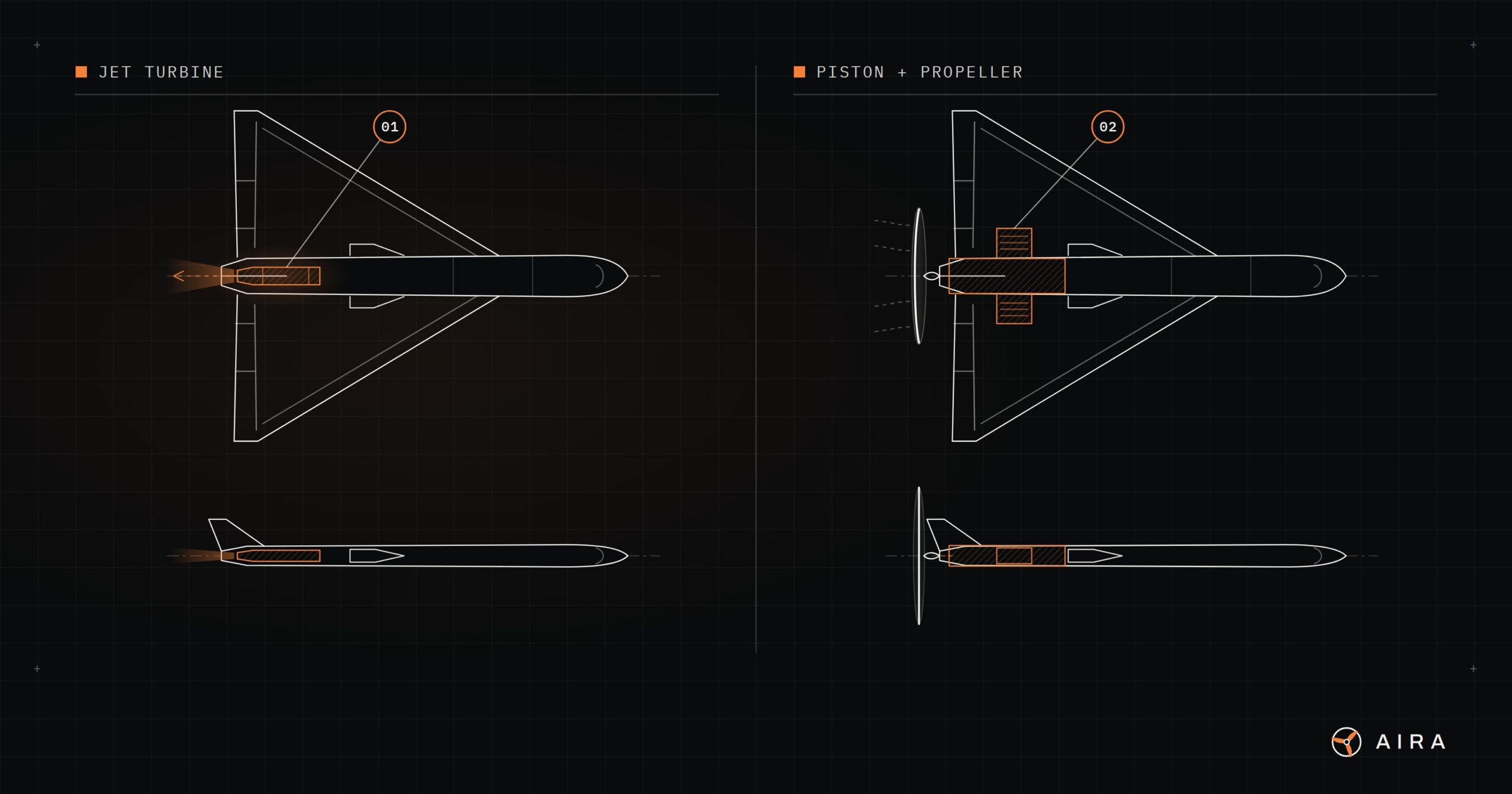
A piston engine and a propeller is still the most common way to power a small uncrewed aircraft. It is a proven, efficient combination, and for a lot of missions it is the right one. But more of the aircraft being designed today need to go faster, carry more for their size and run on the fuel that is already on hand. This is where a small jet turbine starts to make sense.
Speed
A propeller gets less efficient as the aircraft goes faster. Above about 400 mph the blade tips start to approach the speed of sound and efficiency falls away, however much power is behind it. A jet does not hit that wall in the same way. That is why almost everything that needs to fly fast, from target drones to high-speed uncrewed aircraft, uses a turbine.
Thrust for its size
A small turbine produces a lot of thrust for very little weight and frontal area. There is no propeller disc to clear and no large engine block to package, so the airframe can be slimmer and more of it can go to fuel, payload and sensors.
Fewer moving parts
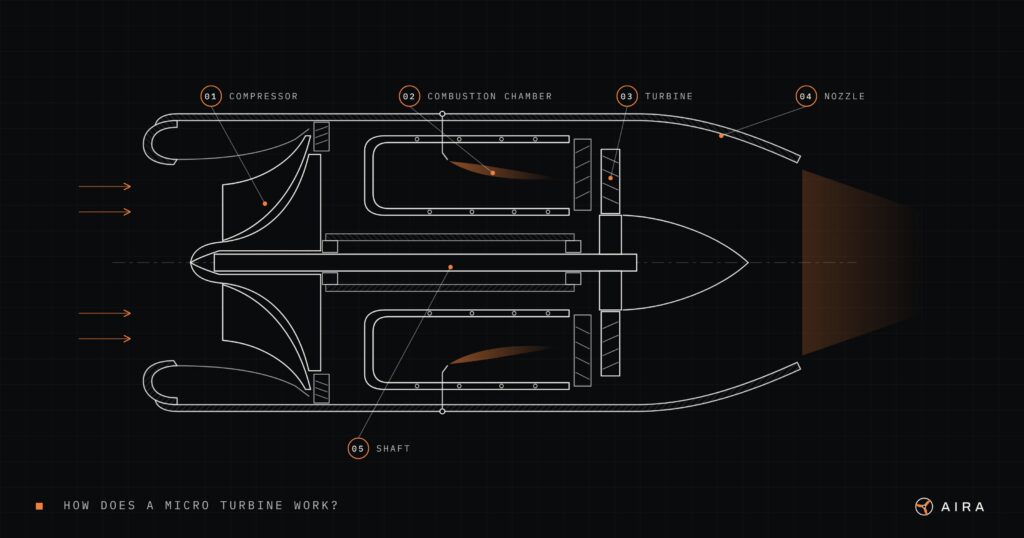
A piston engine has pistons, valves, a crankshaft and usually a gearbox, all moving back and forth thousands of times a minute. A turbojet has one main rotating assembly spinning in one direction. So there is less to wear and far less vibration passed into the airframe and everything mounted on it.
Fuel
Small turbines run on kerosene-type fuels such as Jet A-1 and JP-8, the same fuel used by larger aircraft and many military vehicles. Most small piston engines need petrol, which is harder to store and move safely. Heavy-fuel piston engines do exist, but they tend to be heavier and more complex for the power they make.
Where a piston and propeller still win
A turbine is not the answer for everything. At low speed a piston engine and propeller burns much less fuel, so for a slow aircraft that needs to loiter for many hours, it is usually the better choice. Small turbines are also louder and run hotter. If your aircraft is slow and endurance is what matters most, we will tell you so.
Closing the gap on starting
One place piston engines have always had the edge is starting. Small turbines have a reputation for slow, fussy starts: spinning up, lighting, then waiting for the engine to settle before it will take throttle. On the ground that means more preparation, more fuel burned before take-off and more that can go wrong.
We built the AIR300 around rapid start-up ignition, with the ignition and engine control designed together, so it goes from start command to usable thrust quickly. For operators that means an aircraft that is ready sooner and turns round faster between flights.
Why it matters now
New aircraft programmes increasingly want speed, a common fuel and an engine that is simple to support. That is the gap we are working on. The AIR300 is our first small turbojet for uncrewed aircraft. If you are weighing up a turbine against a piston engine for your aircraft, get in touch and we will help you work out which fits.
Alex AdamouCo-Founder and Director of R&D, Aira Technology